
The Hidden-Cost Effect
We have gotten used to paying more than the price we were shown.
Resort fees. Service charges. Airline add-ons. Tip prompts before anyone has actually served you. Charges for kitchen help, reservation changes, or “convenience.” The listed price is no longer the price. It is just the beginning of the total. That is the hidden-cost effect: the slow normalization of hidden costs and friction that make ordinary transactions feel more complicated, less honest, and more draining than they should be.
It happens so often now that many of us barely notice it anymore. We accept the extra charge. We accept the added step. We accept the small inconvenience because it seems easier than pushing back. But each time we do, the experience teaches us something about the system we are participating in. It teaches us that the real cost may not be what we were shown, and the real price may include more frustration than value.
That pattern does not stay confined to travel or consumer purchases. It shows up in relationships too.
In personal life, hidden costs and friction can look like scorekeeping. It can look like the friend who keeps mental tabs on every favor, the partner who turns every inconvenience into a ledger item, or the family member who makes generosity feel conditional. In professional life, it can look like overcharging, overexplaining, or hiding the real terms until the very end. In both cases, the damage is not only financial. It is relational. It tells people that the relationship is being managed for extraction rather than built on trust.
That is why this topic has been on my mind so much lately.
Why Spain Changed My Perspective
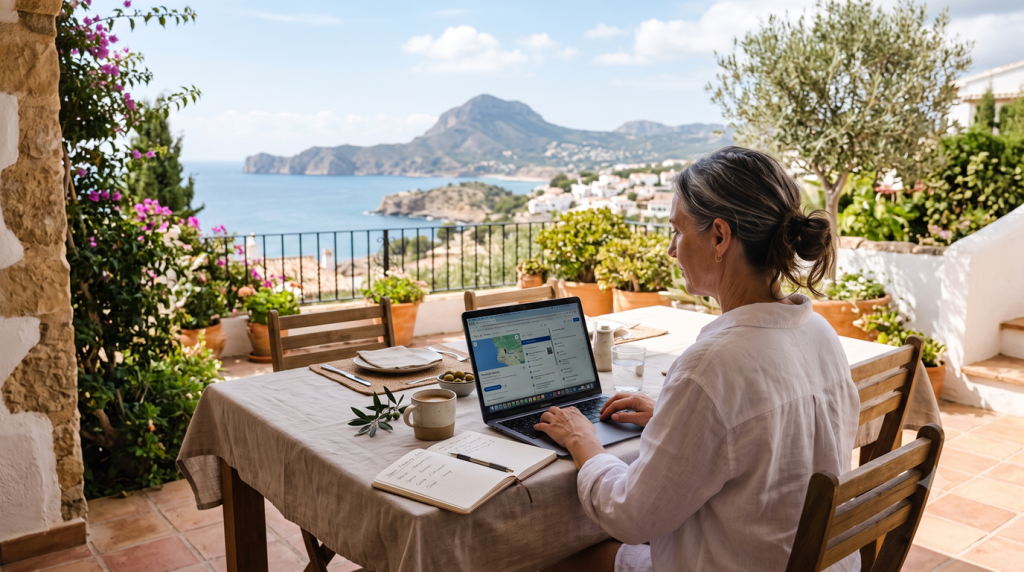
Living in Spain for the last 18 months has changed how I think about all of this.
Not just because I live here, but because living here has made me more aware of cultural differences in how people relate to value, service, and friction. In some systems, the expectation is that everything will be itemized, adjusted, and monetized. Every variation gets a line item. Every extra step becomes an opportunity to charge more. That can make efficiency feel like the only value that matters.
Spain has shown me a different rhythm.
I do not mean that every experience here is simpler, or that friction does not exist. Of course it does. But culturally, I have found myself noticing a different balance between the transactional and the relational. There is often more emphasis on the quality of the experience as a whole, and less instinct to keep slicing it into small charges. That difference has made me more alert to how much energy is wasted when a system assumes people should just tolerate hidden costs and added friction as part of normal life.
And once you see that, you start to notice it everywhere.
You notice it in how a bill is presented. You notice it in how a contract is framed. You notice it in how people are treated when they ask a simple question and get a complicated answer. You notice that hidden costs are not just about money. They are about what a culture expects people to absorb without complaint.
That is the lens Spain has given me. It has made me more sensitive to the difference between something that is truly fair and something that merely looks affordable at first glance.
The Relational Cost
The real problem with hidden costs and friction is that it slowly changes behavior.
When people feel they are being charged for every small thing, they stop feeling open. They become cautious. They start anticipating the catch. They ask less, trust less, and engage less fully. That is true whether the setting is a relationship, a workplace, or a service experience. Friction may look minor in the moment, but it accumulates into a sense that nothing is straightforward.
That accumulation has consequences.
In relationships, it turns warmth into accounting. In business, it turns loyalty into comparison shopping. In everyday life, it turns ordinary interactions into transactions people would rather avoid. Once that happens, the issue is no longer the fee itself. The issue is the emotional residue left behind by the fee.
People do not simply remember what they paid. They remember how the process made them feel.
Did it feel clear or confusing? Respectful or extracting? Easy or burdened? Those are the questions that shape trust over time. And trust is what makes people stay, return, recommend, and deepen the relationship.
My New Project
My new project, Terano, aims to address this head on.
Terano is being built in response to a simple but frustrating reality: people are tired of hidden costs and friction in the places where life is supposed to feel easier. They are tired of surprise charges. They are tired of complicated terms. They are tired of systems that make them work too hard to understand what they are actually buying.
At its core, Terano is about a simpler way to access a real home experience. One fee. No surprise charges. A clearer path to flexible living. The idea is to remove the clutter that too often sits between people and the kind of experience they actually want.
That matters because the hidden-cost mindset has shaped so many parts of modern life. It is not just in travel or housing. It is in the expectation that the advertised price will not be the actual price. It is in the assumption that the real total will only emerge after enough add-ons, exceptions, and fine print have accumulated. Terano is a response to that culture.
And by the way, this is not a timeshare. We have lived that experience too, and we are building something better.
What Terano Is Responding To
Terano is not just reacting to bad pricing. It is responding to a deeper shift in how people want to live.
People want clarity. They want fewer surprises. They want to feel that the system they are entering was designed with their experience in mind, not just with the seller’s margin in mind. They want flexible living without the feeling that every convenience comes with a hidden penalty.
This is also why adaptive leadership matters: the best systems do not cling to rigid assumptions, they respond to real conditions with clarity, flexibility, and trust. It’s also why this project feels timely. The problem is bigger than one industry. We have all become more sensitive to hidden costs because we have all been conditioned to expect them. We know the feeling of seeing one price and paying another. We know the annoyance of a seamless promise turning into a messy process. We know what it feels like when friction is not accidental but built in.
The more that happens, the more valuable simplicity becomes.
Why This Matters Beyond Business
The reason hidden costs and friction resonate so strongly is that they mirror what happens in relationships.
A hidden fee says, “There is more to this than you thought.” A small act of scorekeeping says the same thing. A process that feels designed to extract rather than serve says the same thing. Over time, those messages teach people to brace themselves. And once someone starts bracing, they are no longer fully present.
That is why this is not a trivial issue. It is not just about resort fees, airline add-ons, or timeshare contracts. It is about the emotional architecture of the systems we build and the relationships we keep. A fair system feels like a relief because it does not ask people to do constant defensive math.
That is what I want Terano to represent: not just a different product, but a different expectation.
Closing Thought
The hidden-cost effect is really the friction effect.
It is what happens when small costs, repeated often enough, begin to shape how people feel about value, trust, and connection. It makes ordinary things feel heavier than they should. It makes relationships feel more transactional than they need to be. And it trains people to expect the next extra charge before they have even finished paying the first one.
Living in Spain has made me more aware of how much culture shapes our tolerance for that. Building Terano has made the response feel practical, not theoretical. The goal is simple: create something that respects people enough to be clear from the start.
Because when the price is not really the price, and the process is not really simple, people notice.
And they remember.