
This is my third Thanksgiving abroad, away from the people who taught me what Thanksgiving was supposed to feel like.
There is no long table in a childhood home. No familiar chairs. No one asking whether the turkey is done while someone else insists it needs another twenty minutes. No familiar argument about stuffing. No one arriving late and somehow still getting the best seat.
Instead, there is Spain.
The day has a different rhythm. The light comes later. Most people are off to work and school as usual. The local supermarket does not have cranberries. The meal may include local additions. It may include people whose traditions are not mine, but who have become part of mine anyway.
I am a US expat who has lived in Spain for the past two years. This is my third Thanksgiving away from family and friends. Each year, I understand a little more clearly: you do not need the same table to build the same gratitude.
You need intention. You need people willing to show up. And you need a place that makes life work, not only look good in photographs.
The First Thanksgiving Away From Home
The first Thanksgiving abroad is a strange emotional equation. You expect homesickness. What surprises you is how specific it is.
It is not only missing your family. It is missing the rhythm of the day. The slow morning before the love and preparation of the meal. It’s missing the Thanksgiving day parade and the Westminster dog show on TV in the background while the traditional smells of the day waft through the house. It is missing the long holiday weekend.
When you live far from home, the holidays expose the structure of your life. You notice which relationships have survived distance. Which traditions you actually want to carry forward, rather than repeat because you always have. And that some things you thought were essential were habits and that some things you took for granted were the point.
That first year, I tried to recreate Thanksgiving exactly. I looked for familiar ingredients and made a plan that looked like the plan I would have made at home. I wanted the holiday to feel recognizable.
It did not.
Not because the food was wrong, or because the people were wrong, but because I was asking a new life to perform an old one. I was treating belonging as something that could exist in only one place, with one group of people, around one particular kind of table.
Spain taught me otherwise.
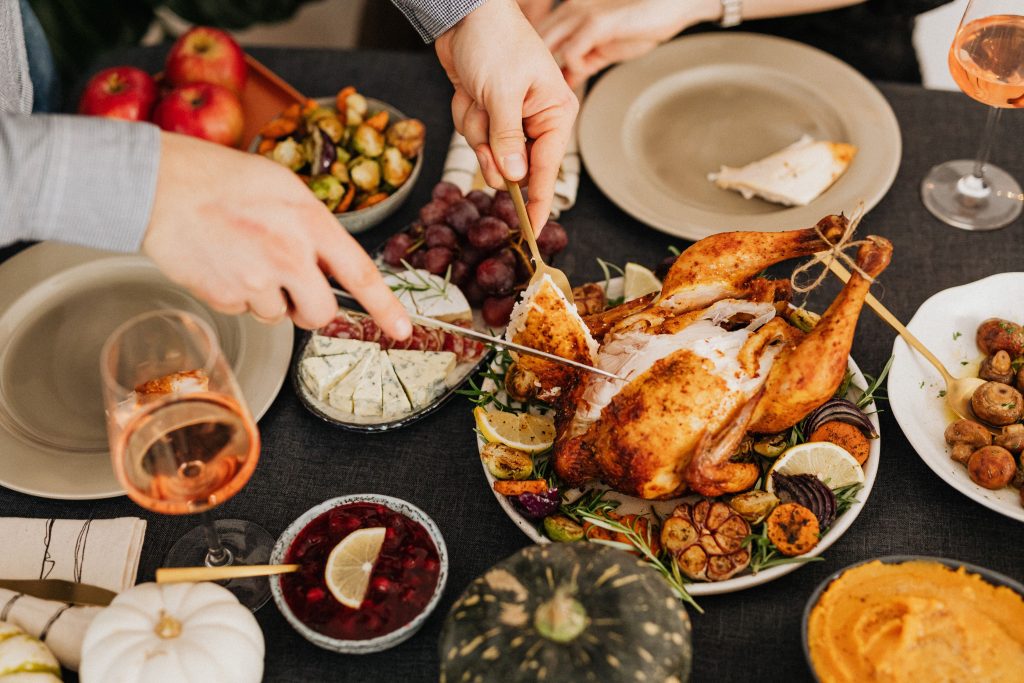
What Distance Teaches You About Family
Living abroad does not make you love your family less. If anything, it makes the love easier to see.
Distance removes the assumption that connection will happen automatically. You cannot rely on dropping by or on a familiar calendar of birthdays, dinners, and casual weekend plans. You have to choose connection.
You send the message and make the call at an inconvenient hour because the time difference matters. You ask better questions: What are you cooking? Who is coming? What made you laugh this week?
You also learn that love is not measured by proximity. It is measured by attention.
There is a particular kind of gratitude that comes from distance: gratitude for the people who make room for you across time zones. Gratitude for the friend who stays on the phone while you cook or for the parent who sends photos from a family gathering and makes you feel included rather than excluded. Gratitude for the sibling who understands that “I miss you” sometimes means, “I am building a life I love, and I wish you could see it.”
That is the part nobody fully prepares you for. Being away does not only create loss. It creates a sharper awareness of what you have.
I am grateful for my family in a way I may not have been if I had never left. Not because being away is easy, but because distance gave me language for what their presence has always meant.
Belonging Is Built, Not Inherited
For a long time, I thought belonging was something you either had or did not have. You belonged to a family, a hometown, a school, a group of friends. Those bonds matter. They still matter.
But living in Spain has taught me that belonging can also be built.
It is built in small, practical ways. A neighbor remembers your name. Someone explains which market has better produce. A friend invites you to a Sunday lunch that lasts longer than expected. Someone translates not only the language, but the social rules. A person says, “Come by,” and means it.
It is built when you stop being a visitor and start being a participant.
There is a difference between living somewhere and belonging somewhere. Living somewhere means you have an address. Belonging means you have a role. You know where to buy bread and which café works for a morning of focused work and which one is better for conversation. You know when the neighborhood feels alive and when it feels quiet. You have people to call when something goes wrong, and people to celebrate with when something goes right.
I am part of a growing community of Americans building lives in Spain. Behind the numbers are individual decisions: people choosing a different pace, climate, and set of possibilities. But the numbers do not capture the harder part: making a life. The paperwork. The language. The friendships that take time. The holidays that suddenly require a plan.
That is why chosen community matters.
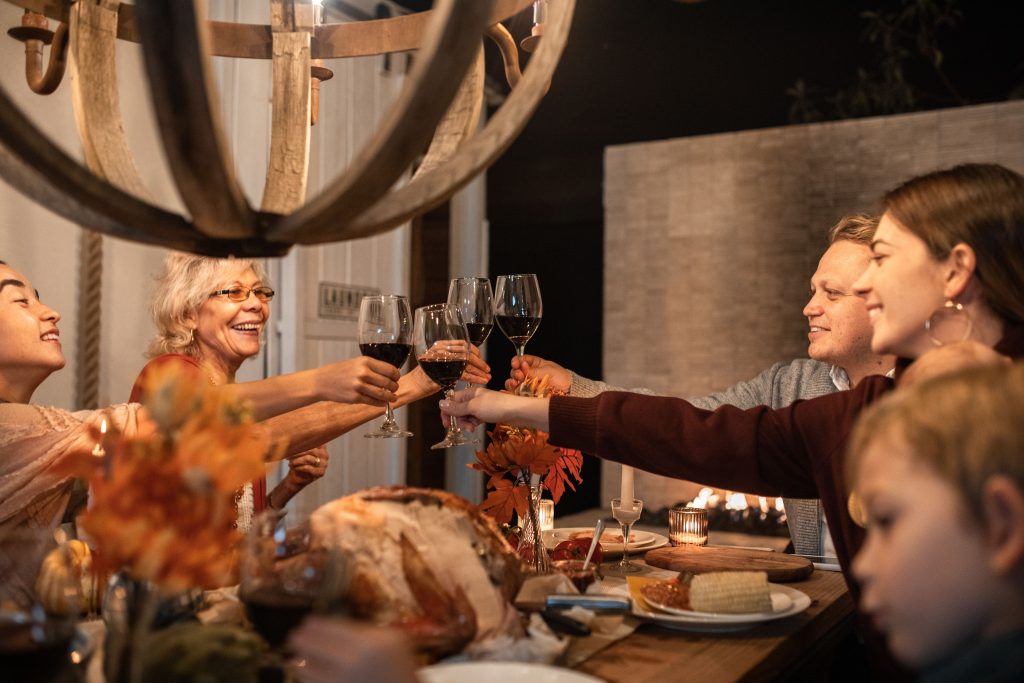
The People Who Become Your Thanksgiving Table
Chosen community is not a replacement for family. It is an addition to it.
My Thanksgiving table in Spain may include other expats who understand the particular ache of being far from home. It may include Spanish friends who are curious about the holiday and generous enough to join it. It may include neighbors, colleagues, fellow founders, or people I met through work who became friends because we kept showing up for one another.
Over the past two years, our celebrations have included many people who are not American. Some had never celebrated Thanksgiving before. Others knew it only through films, television, or vague ideas about turkey and American football. Once they joined, they understood the idea quickly.
They liked it.
Not because they wanted to become American, but because the core of the holiday translates: pause, gather, cook, share, and say thank you. Thanksgiving has parallels with harvest festivals and days of thanksgiving in other cultures, all centered on food, family, friends, and appreciation. Research also suggests gratitude can support wellbeing across countries, even though people express it differently.
What has surprised me most is how often our non-American friends say some version of the same thing: I wish we had a holiday like this.
They do not necessarily appreciate the turkey but the permission to gather without a birthday, wedding, religious holiday, or national celebration as the reason. They like the idea of a meal built around appreciation for the people in front of you.
That is what I have come to value about sharing Thanksgiving abroad. It becomes less about preserving an American tradition and more about offering a simple human ritual: come as you are, bring something if you want, sit down, and tell us what you are grateful for.
The table changes. The gratitude does not.
When you build a holiday rather than inherit one, you have to decide what you want it to mean. For me, Thanksgiving has never been only about a menu. And now it’s also about recognizing the people who have made a foreign place feel less foreign.
The friend who helped me navigate something practical. The person who checked in during a difficult week. The neighbor who gave advice without making me feel like an outsider. The people who turned a new country into a place where I could imagine a future.
Gratitude is not only something you feel. It is something you practice.
Gratitude becomes practice in small choices: extending an invitation, cooking a meal, sending the message, making the call, or showing up at someone else’s table—even when it is not the table you expected to be sitting at.
What I’ve Learned About Belonging
Before I started Terano, I spent a lot of time thinking about a question that now feels obvious: what makes a place feel like home?
Not in the sentimental sense. In the practical one.
Whether a place can feel like home often comes down to practical questions: room to cook for people, space to work without living out of a suitcase, the ability to host a friend without turning the weekend into a logistics project, and enough time to learn the neighborhood, build routines, and let people get to know you.
Those questions shaped how I think about Residential Access at Terano: creating a way for people to use premium homes for longer stays, family time, work, and gathering, without taking on the full weight of ownership.
But the larger lesson has less to do with property and more to do with leadership.
Belonging is not something you can announce. You cannot put it on a slide, add it to a values statement, or expect an offsite to create it. It is built through the conditions people experience every day: whether they feel informed, whether they can speak candidly, whether their work is visible, and whether they believe someone will notice if they are struggling.
Leaders often talk about culture as if it is separate from operations. It is not. Culture is what happens in the decisions we make when no one is watching: who gets included in a conversation, how feedback is delivered, what behavior gets rewarded, and whether people feel safe asking for help.
Research on workplace belonging points to three reinforcing conditions: people need to feel comfortable, connected, and able to contribute. Leadership behavior, culture, and personal relationships shape whether those conditions exist. Psychological safety matters too. Teams with higher psychological safety report stronger performance and less interpersonal conflict.
A well-designed space can remove some of the friction that keeps people from gathering, resting, working, or staying longer. That is not the same as creating community, but it can create the conditions for it.
The same is true in any organization. A leader cannot force friendship, trust, or shared purpose. But a leader can make it easier for those things to develop.
Leaders can create regular moments for honest conversation, make expectations clear, and give people a reason to gather beyond status updates. They can recognize contributions before they disappear into the next deadline, and make room for different working styles, family responsibilities, languages, and cultural norms.
Small rituals matter. Purposefully designed group rituals can foster togetherness, energy, and psychological safety; they help people feel supported and ready to engage. In practice, that may be a weekly check-in that begins with one real question rather than a list of updates. It may be a team dinner where someone shares what they are grateful for. It may be a simple norm: when someone raises a concern, the first response is curiosity rather than defense.
The goal is not to manufacture closeness. It is to remove the obstacles that prevent it.
That is what I have learned from building a company and from building a life abroad: belonging is less about finding the perfect place or the perfect team. It is about creating the conditions where people can participate, contribute, and be known.
You Don’t Need the Same Table to Build the Same Gratitude
This Thanksgiving, I will think about the people I cannot sit beside. I will miss them. I will wish the time zones were smaller and the ocean less wide.
But I will also look around at the table in front of me.
It may include Americans who understand the particular nostalgia of the day. It may include Spanish friends, European neighbors, and people from places I never expected to become part of my life. Some will be trying stuffing for the first time. Others will bring a dish from their own tradition. Someone will ask what Thanksgiving is actually about, and someone else will answer before I can: gratitude.
The table will not look like the one I grew up with. The dishes may be different. The conversation may move between languages. The people may have entered my life in ways I could not have predicted.
And yet, if I pause long enough, I will feel it: the same gratitude.
Gratitude for family, even from afar. Gratitude for friends who became family. Gratitude for the non-Americans who embraced a holiday that was never theirs, but made it feel shared. Gratitude for a community that did not exist until I chose to build it. Gratitude for the places that have made room for me.
You do not need the same table to build the same gratitude.
You only need to notice who is around it, and let them know they matter.